Photo: Credit to the Owner
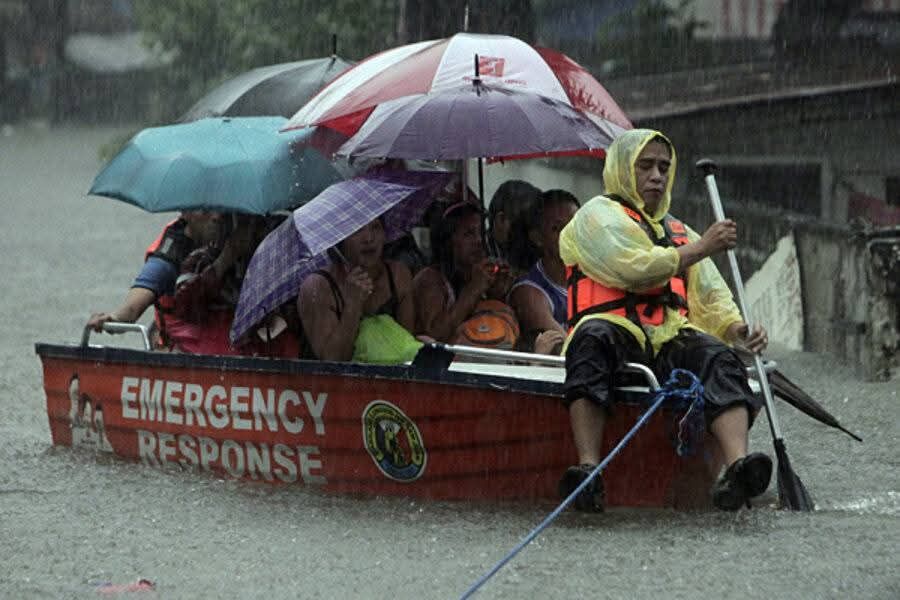
Today, as floodwaters submerged roads, homes, and dreams across many parts of the Philippines, we once again witnessed the painful cycle that has become almost ordinary: rainfall turning into ruin. While much of the discourse will point to corruption, weak infrastructure, or climate change and rightly so there is a deeper root that is often left unspoken, yet more corrosive than any failing drainage system. It is the absence of care for our neighbor. The flooding is not only the result of broken systems, but of broken relationships.
As a community development practitioner, I turn to Laudato Si’, Pope Francis’ encyclical on the care for our common home, for insight. It reminds us that everything is connected “tudo está interligado”. The environment is not a separate domain from the social and spiritual; it is a reflection of how we relate to one another and to the world. When we ignore this interconnectedness, disasters like today’s flood are not just natural occurrences, but moral and social failures.
Flooding is not new. Typhoons are not new. What is new and alarming is our increasing indifference. The clogged esteros are not simply the fault of city engineers. They are the accumulated apathy of neighbors who saw someone dumping waste into rivers and said nothing. They are the manifestation of families who threw trash in plastic bags thinking it was “someone else’s job” to clean up. They are the result of barangay leaders who allowed illegal structures to block waterways but remained silent to keep political alliances intact. This is not just a governance problem it is a neighborliness problem.
Laudato Si’ challenges us to move beyond individualism toward “ecological conversion.” That conversion, at its heart, is relational. It asks: how can I say I love God, or love nature, if I do not love my neighbor? If I ignore the urban poor who live in flood-prone areas? If I hoard resources while others drown in neglect? If my choices as a consumer, builder, or public servant contribute to the degradation of our shared home?
The problem is not merely garbage; it is the culture that enables it. It is the mindset that what I do in my own backyard or in my company, or in my barangay doesn’t affect anyone else. We have failed to see the truth that in community, there is no such thing as “my mess” alone. As long as one person suffers, we all suffer. Today’s flood did not discriminate it touched rich and poor alike. But make no mistake: it devastated the poor the most, who have the least to recover with and the least voice to speak out.
This is why community development must no longer be transactional giving relief goods, building canals, passing ordinances but transformational. It must begin with reweaving the social fabric of neighborhoods torn by indifference. It must cultivate local leadership rooted not in prestige but in presence. It must form citizens who see that environmental care is not separate from caring for people.
The flood is a warning. But it can also be a wake-up call. We are not powerless. Every barangay, every neighborhood, every family has a choice. We can begin to restore our watersheds, organize clean-ups not just as events but as habits, and raise children who understand that loving their environment is loving their community. We can hold leaders accountable, yes but also hold ourselves accountable to each other.
In the end, perhaps the flood is not merely a punishment from nature, but a painful parable from God a reminder that when we stop caring for one another, even the land begins to weep.
– Daryl Aloya, Laudato Si’ Coordinator of DBST